SAM 3
Computer vision & video analytics
Detect, count, classify and track selected objects or activities in images and video.
- People counting
- Queue analysis
- Object tracking
- Occupancy
- Zone activity
Home / Applied AI solutions
Turn existing cameras, images, video and operational data into useful intelligence. We combine proven AI models, custom processing and lightweight integrations to solve specific challenges without unnecessary complexity.
Cameras, video, images and business systems often hold information that is hard to measure by hand. We help identify what AI can extract and turn it into reports, alerts or workflows. Instead of starting with a complex platform, we start with the outcome you want.
A frame from a camera you already have, or files and records.
Models find what matters: here, people and carts, inside a drawn checkout zone.
Counts and events as records a system can store, query and chart.
An alert, a report or an update in the tool your team already uses.
Whether a camera or data source can be used, and how well, depends on its quality, access and the specific requirement. We check this first, on your samples.
We combine existing models, specialised processing and custom development into AI workflows for specific operational challenges.
Detect, count, classify and track selected objects or activities in images and video.
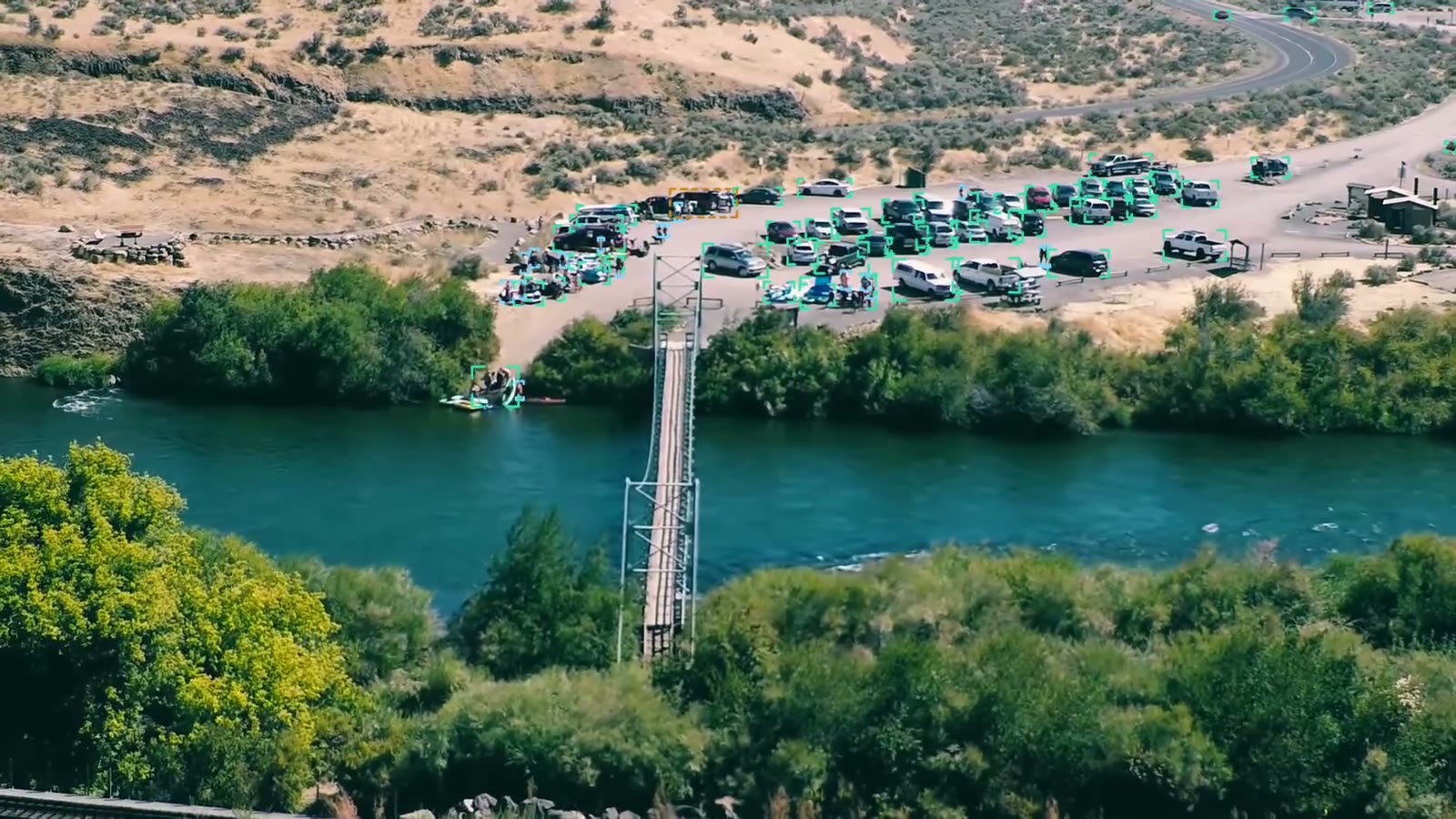
Vision-language models and other techniques produce structured descriptions, find selected events and make video collections searchable.
Preprocessing, inference, task-specific rules and output validation, combined into one workflow designed around your requirements.
Structured AI outputs connected to supported business tools, dashboards, reports or notification systems.
From existing CCTV systems to industrial images, the right combination of models and processing turns raw data into operational information.
Compatible camera feeds become operational analytics on customer traffic, occupancy and queues.
Custom image processing and suitable models find selected defects, anomalies and inconsistencies.
Selected objects, zones and movements become operational statistics from compatible visual sources.
Video processing plus AI models identify relevant events and produce searchable, structured summaries.
Different challenges need different approaches. We choose models and processing based on accuracy requirements, deployment constraints and operating cost.
Not every pipeline needs a vision-language model.
Related: how we combine models, processing and review in Intelligent data workflows.
The most advanced model isn’t always the right choice. We design workflows around the task, use efficient processing first and heavier models only where they add something. The aim is a balance of accuracy, processing cost, infrastructure and maintainability.
Start with existing technology instead of training everything from scratch.
Sampling, event triggers and efficient pipelines avoid unnecessary computation.
Adapt models on representative data when general-purpose ones can’t meet the requirement.
Camera quality, lighting, hardware, latency, integration and running cost, from day one.
Where technically compatible, we work with your existing cameras, video feeds, files and software, so AI outputs are usable in your current operations.
We confirm support for specific camera models, platforms and tools during scoping, rather than listing integrations we haven’t verified for your setup.
Each stage ends with something you can judge before committing to the next. Timelines are agreed per project.
The operational problem, existing data, required outputs and constraints.
Deliverable: scoped problem & success criteriaA focused feasibility assessment or pilot on representative samples, with measurable criteria.
Deliverable: feasibility results on your dataThe processing workflow, connected to the agreed output or business system.
Deliverable: working pipeline & integrationReal-world performance reviewed, recurring failures fixed, optional ongoing improvement.
Deliverable: performance review & support planThe practical things we check early, so a pilot answers the right question. For labelled training data rather than a working system, see Managed data operations.
Often, yes, depending on camera compatibility, access to the video streams, recording quality and the intended application. We evaluate these requirements during initial scoping.
Not always. Many problems can be approached with pretrained models and task-specific processing. Custom training or fine-tuning is considered when it is needed to meet the performance requirements.
Depending on the models, hardware, security requirements and workload, local, cloud or hybrid processing may be appropriate.
We define project-specific acceptance criteria and evaluate performance on representative data, including relevant difficult cases and operating conditions.
Cost depends on the task, data sources, integration requirements, processing infrastructure, accuracy expectations and ongoing support. A limited pilot can establish technical feasibility and realistic operating costs.
We can scope ongoing monitoring, model updates, quality review and additional integrations according to the project requirements. Outputs and review history can be followed in Point AI Studio.
Have existing cameras, video, images or a repetitive process you want to improve? Tell us about the challenge and we’ll help explore a practical AI approach.